AgroPolis – Promoting AGROecology through co-creating value chain innovations and improved multi-level POLIcieS in a beyond-growth Europe



Project description
The term agroecology emerged more than a century ago with the aim of promoting the sustainability of food systems. Key conceptual frameworks of agroecology include the 13 principles of agroecology and the 10 elements of agroecology. Today, awareness and implementation of agroecology in Europe remain limited; it is estimated that less than three percent of European farms are fully agroecological. Food value chains are largely dependent on long, global networks, which contrasts with agroecology’s focus on locality, diversity, and fairness.
Although one of the key barriers to the transition to agroecology is the lack of business models that connect the food system from farm to fork, most existing agroecology research still primarily focuses on agricultural practices. Considering value chains and adopting a systemic perspective on the transition to agroecology, it is clear that this transition cannot occur independently of the broader economic system. Agroecology represents a shift towards greater diversity and plurality of values and practices, which is also reflected in the vision of an economy beyond growth.
In this context, the main objective of the AgroPolis project is to “co-create innovations in agroecological value chains, future visions, and related policies suitable for a post-growth Europe.”
Objectives
- To develop a new evaluation framework that integrates agroecological principles into a value chain-oriented assessment framework.
- To identify and analyse key structural barriers that hinder the transformation towards agroecological value chains at both European and national levels.
- To establish a set of local and regional Living Labs for the co-creation of new agroecological value chain innovations and pilot activities.
- To establish a transnational policy hub for the co-creation of new ideas for European and national agroecological policies that support value chains suitable for a post-growth Europe.
- To analyse and synthesise the findings of the Living Labs for the development of improved agroecological value chains, future visions, and related policies suitable for a post-growth Europe.
- To disseminate findings to relevant practitioners and policymakers at local, national, and European levels.
The AgroPolis project uses Living Labs as a tool to engage stakeholders across the entire value chain in co-creating innovations in agroecological value chains, as well as future visions and policies suitable for a post-growth Europe.
The AgroPolis concept is based on a two-level multi-actor Living Lab structure:
- The first level consists of six national Living Labs, geographically distributed across Europe (Germany, Italy, Norway, Slovenia, Spain, Sweden).
- The second level is a transnational policy hub focused on the development of policies related to agroecological value chains at national and European levels.
To support the Living Labs, two research activities will be carried out:
(1) the development of a methodology for evaluating agroecological value chains, and
(2) a transnational comparative policy analysis focusing on the integration of agroecological principles and related barriers within national food policies.
The results of the Living Labs will be synthesised in two work packages that will deliver key outputs for practitioners and policymakers. The agroecological potential of value chain and policy innovations will be tested using the evaluation methodology. A key element of the AgroPolis concept is the dissemination and communication of both the process and results of the project.
Role and Activities of the Agricultural Institute of Slovenia
The Agricultural Institute of Slovenia (KIS) will act as an equal partner in the project, contributing to the main objective as well as all specific objectives (work packages), and will actively participate in the transnational hub for co-creating new agroecological policies at both European and national levels.
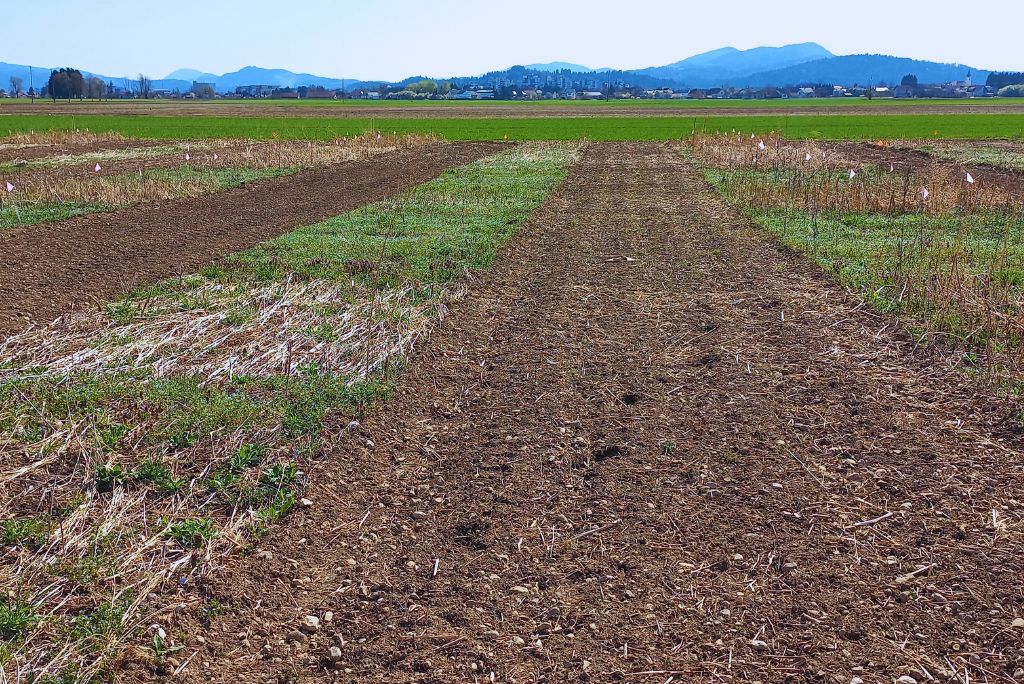
KIS will establish the Slovenian Living Lab, focusing on agroecological farming practices related to the use of cover crops and catch crops to:
- increase soil organic matter,
- reduce nitrate leaching into groundwater, and
- enhance biodiversity in agricultural landscapes.
This work will focus on the production segment of the value chain and will include the preparation of publications and training materials on good practices for the use of cover and catch crops for farmers.
In addition, KIS will assess barriers and challenges faced by farmers and agricultural advisors that hinder the wider adoption of these agroecological practices in food production. Based on this knowledge, recommendations will be developed for policymakers at both Slovenian and European levels, contributing to the development of a new tool for integrating agroecology into value chain sustainability assessment.
Partnership
Project coordinator:
Nordland Research Institute, Norway
Project partners:
- Agricultural Institute of Slovenia, Slovenia
- Stockholm Environment Institute, Sweden
- Institut für Klimaschutz, Energie und Mobilität e. V., Germany
- Free University of Bozen-Bolzano, Italy
- FUNPASOS Fundación por la Sostenibilidad Participativa, Spain