L4-70179 – Climate change adaptation in viticulture and winemaking

Project description
Viticulture and winemaking have a long tradition in Slovenia. Considering the changes resulting from the climate, ecological and economic crises, it is essential to optimise vineyard management practices, including the evaluation of optimal sites, the amount and method of irrigation, soil management and precision oenology, based on the principles of sustainability established by the European Green Deal and mitigation strategies.
It is now clear that, due to climate change, the key to the sustainability of the viticulture and winemaking sector will be the adoption of precise water management strategies. This requires a comprehensive understanding of the water status of vineyards and the physiological and metabolic response of grapevines to different levels of drought stress.
The project will focus on grapevine irrigation (optimisation of the timing and amount of water to ensure high-quality yields), cooling of grapes during heat waves, and the response of grapevines to drought and heat stress. We assume that the response of autochthonous/local varieties to abiotic stress differs from that of international varieties. Findings based on metabolite profiling and transcriptomics will provide the basis for developing guidelines for viticulture in the future.
By investigating the metabolic response of grapevines and identifying biomarkers, the project will establish a scientific basis for guidelines that increase vineyard resilience while ensuring high-quality yields. The project will also introduce digital support for winegrowers to enable rapid decision-making throughout the growing season, from flowering to harvest.
Project objectives
The aim of the project is to optimise water use and grape cooling during periods of extreme temperatures in terraced vineyards. The irrigation decision support system will be standardised for the flysch soils of terraced vineyards in the Primorska wine-growing region, while guidelines for optimal water use will also be developed.
The project has seven key priorities:
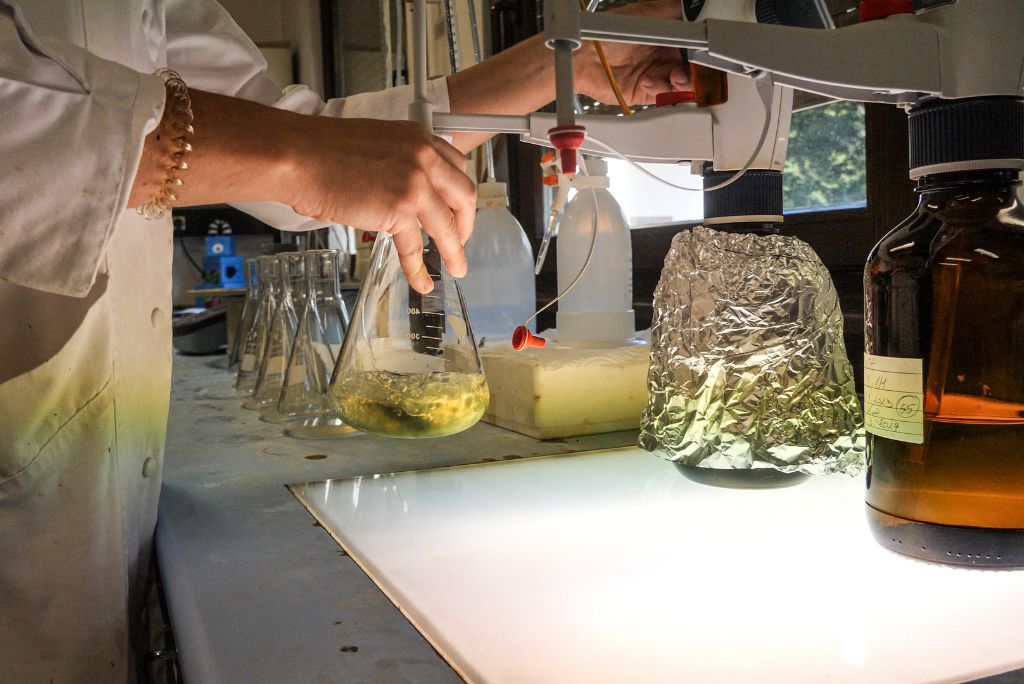
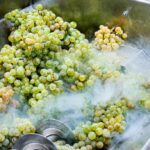
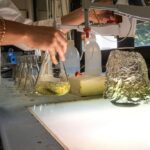
- Establishment of a research centre and analytical platform for monitoring grape and wine quality and supporting stakeholders – connecting research capacities, transferring knowledge and complementing research equipment within an expanded analytical platform.
- Metabolomic and transcriptomic profiling of grapevine responses to drought and heat stress – studying the response of primary and secondary metabolites in grapevine leaves and berries to drought and heat stress.
- Remote sensing – correlation of multispectral and hyperspectral data with grapevine water stress and selected metabolic biomarkers of drought.
- Carbon and nitrogen isotope composition in leaves – evaluation of δ13C and δ15N values as indicators of water deficiency in plants, including when the level of drought stress is low to moderate.
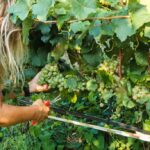
- Digitalisation for efficient water use – implementation of irrigation decision support systems (DSS) in ten vineyards in the Vipava Valley, Goriška Brda and Karst.
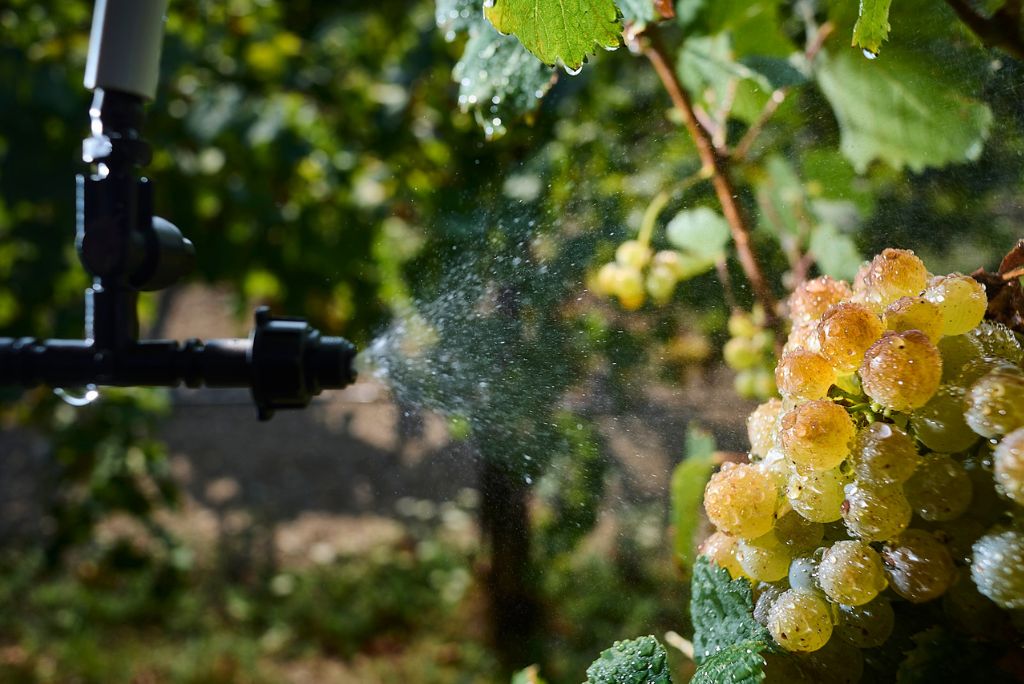
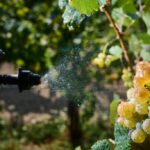
- Grape cooling system during ripening – reducing grape temperature during extreme temperatures (above 35 °C) using special micro-sprinklers that create humidity around the grape clusters and thereby reduce grapevine temperature.
- Knowledge transfer – in addition to introducing winegrowers to digitalisation, guidelines for supporting viticultural decision-making in terraced vineyards in a sub-Mediterranean climate will be developed. The guidelines will also be applicable to other wine-growing regions.
The project aims to provide winegrowers with an action plan containing concrete solutions for climate change mitigation and vineyard adaptation. Knowledge transfer will take place through multimedia materials, workshops, lectures and guidelines, as well as by upgrading the well-established partnership.
Partnership
The project is led by the Agricultural Institute of Slovenia, with the University of Nova Gorica and the Jožef Stefan Institute also participating in the project team, together with research groups from Italy: the University of Udine, University of Trieste and Ca’ Foscari University of Venice.
Slovenian wineries and producer associations, including the Vipava Valley Winegrowers Consortium and the Teran Consortium, as well as agricultural advisory services, will also be involved in knowledge transfer. Through their work in the field, they play a key role in transferring knowledge and technologies to winegrowers and winemakers.